Marketing Analytics Solution: The Complete Guide to Smarter Business Decisions in 2026
Understanding Modern Marketing Intelligence
Businesses generate vast amounts of customer, campaign, and sales data every day. Transforming this information into meaningful insights has become essential for staying competitive in 2026. A marketing analytics solution helps organizations collect, organize, and analyze data from multiple channels, enabling leaders to make informed decisions based on measurable outcomes rather than assumptions.
As customer journeys become more complex, businesses need reliable methods to understand which activities contribute to revenue, customer engagement, and long-term growth. Advanced analytics simplifies this process by providing accurate, data-backed insights that support strategic planning.
Why Data-Driven Decision Making Matters
Marketing investments continue to increase across digital and offline channels, making accountability more important than ever. Organizations that rely on evidence instead of intuition are better equipped to allocate budgets efficiently, identify profitable customer segments, and improve campaign performance.
Data-driven decision making also reduces uncertainty. By evaluating historical trends alongside current performance, businesses can anticipate market changes, identify emerging opportunities, and respond quickly to evolving customer behavior. This approach improves operational efficiency while supporting sustainable business growth.
Essential Features of an Effective Analytics Platform
An effective analytics platform brings together information from multiple sources into a unified environment. Instead of working with disconnected reports, decision-makers gain a complete view of customer interactions, campaign performance, and business outcomes.
Modern platforms typically include automated data integration, interactive dashboards, predictive analysis, and customizable reporting capabilities. They also support advanced visualization techniques that make complex information easier to understand for both technical and non-technical stakeholders.
Another important capability is scalability. As organizations expand into new markets or launch additional campaigns, the platform should continue delivering reliable insights without compromising speed or accuracy.
How Artificial Intelligence Improves Business Insights
Artificial intelligence has significantly enhanced the way organizations analyze marketing performance. Machine learning algorithms can process large datasets, identify hidden patterns, and generate forecasts with greater speed than traditional reporting methods.
Predictive models help businesses estimate future demand, customer lifetime value, and campaign effectiveness before major investments are made. Automated anomaly detection can also highlight unexpected performance changes, allowing teams to investigate potential issues early.
Although AI accelerates analysis, human expertise remains essential for interpreting findings within the context of business objectives and industry conditions.
Benefits Across the Organization
Analytics is no longer limited to marketing departments. Sales, finance, product development, and executive leadership all benefit from consistent access to reliable performance data.
Shared insights encourage better collaboration between teams, reducing conflicting assumptions and improving organizational alignment. Finance teams can evaluate return on investment more accurately, while sales teams gain deeper visibility into customer preferences and buying behavior. Product teams can use customer feedback and engagement metrics to prioritize future improvements.
This integrated approach supports faster decision making while improving overall business performance.
Best Practices for Successful Implementation
Successful implementation begins with clearly defined business objectives. Organizations should identify the questions they want analytics to answer before selecting metrics or building reports.
Maintaining high-quality data is equally important. Inaccurate, incomplete, or duplicated information can lead to misleading conclusions. Regular data validation, standardized measurement practices, and ongoing governance help ensure reliable results.
Continuous monitoring also plays a critical role. Markets evolve, customer preferences change, and competitive landscapes shift over time. Reviewing performance regularly enables businesses to refine strategies based on current evidence instead of outdated assumptions.
Looking Ahead to 2026
As organizations continue embracing digital transformation, analytics will become even more central to strategic decision making. Advances in automation, predictive intelligence, and real-time reporting will provide faster access to actionable insights while reducing manual analysis.
Businesses that invest in accurate measurement, trusted data practices, and continuous optimization will be better positioned to adapt to changing market conditions. By combining technology with experienced decision-making, organizations can improve efficiency, strengthen customer relationships, and build a more resilient foundation for long-term growth in an increasingly data-driven economy.
Report Story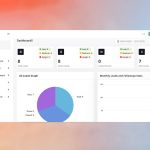



Recent Comments